Microsoft Copilot harness: prove the benefit before moving your agent
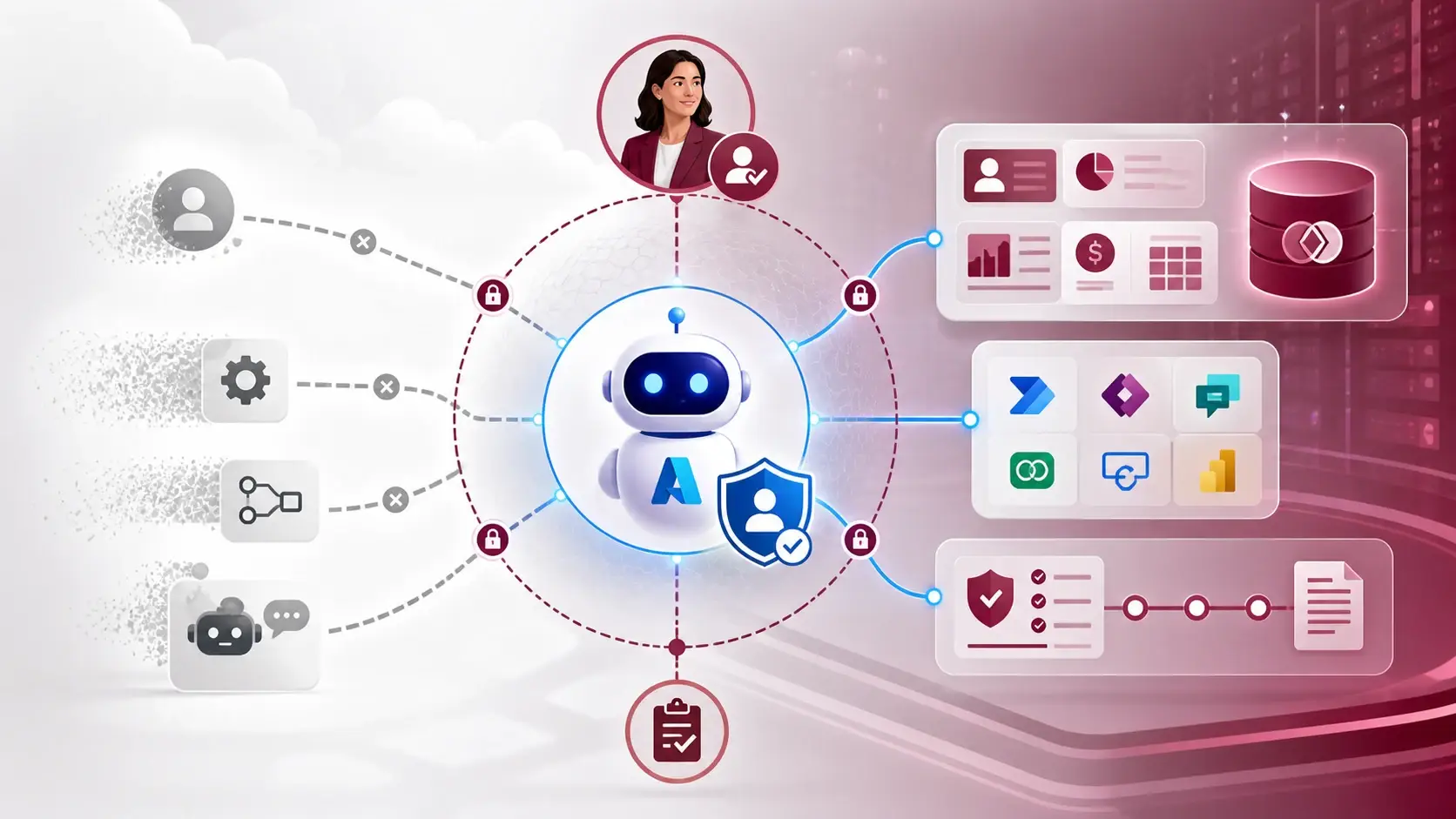
Microsoft's 28 October announcement puts the agent runtime back in the architecture conversation. The GitHub Copilot harness in Copilot Studio is becoming the Microsoft Copilot harness. For teams maintaining an existing agent, the useful question is what a different runtime would improve in their own process, and how they would prove it.
What the announcement actually changes
In its Copilot Studio announcement, Microsoft says existing agents continue working with no changes to capabilities or billing from the rename. Updated terminology will appear in the product over the coming weeks. Some documentation still uses GitHub Copilot harness, so readers will encounter both names during the transition.
A harness is the layer around the model that manages context, instructions, tool use and progress through a task. Microsoft reports improvements in its internal evaluations, including recovery after failed tool calls. Those findings are useful reasons to investigate, but they are not a performance forecast for your agent or a guarantee that a business process will finish successfully.
Match the runtime to the work
Microsoft's comparison guidance distinguishes bounded tasks from work that needs extended coordination, larger context and repeated reasoning. It also cautions that a more capable harness can increase consumption and latency on a simple problem. The standard harness remains relevant; it can also reason, chain tools and use retries.
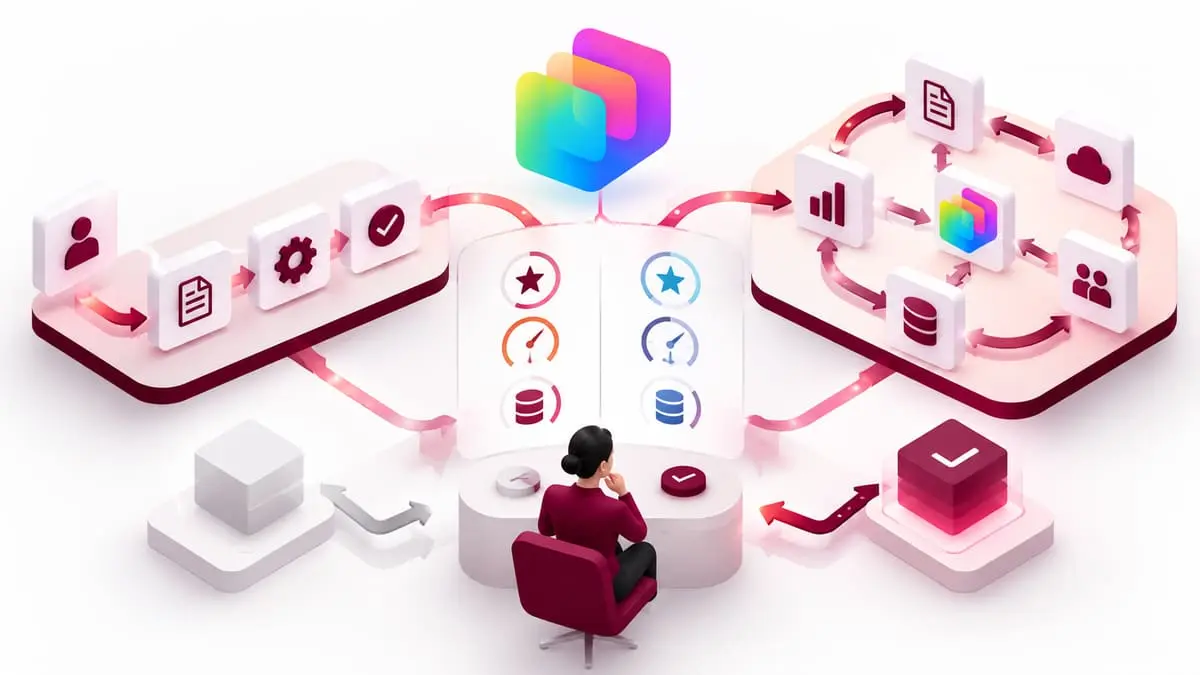
Consider two hypothetical service scenarios. The first collects an equipment identifier, checks a warranty record and routes a request. Its success depends on consistent validation and a predictable handoff. The second reviews service history, compares several documents, investigates conflicting evidence and drafts a briefing for a service manager. The second gives adaptive orchestration more useful work to do.
I would keep these as separate evaluation cases. Combining them into one large agent can make a routine lookup pay for reasoning it does not need, while hiding whether the complex scenario improved at all.
Count the cost of an accepted result
The usage-based billing documentation includes model tokens, tools and the harness itself. It also states that building, previewing, testing and creating evaluations can consume credits. A pilot therefore needs an allocation and an owner before the first production user appears.
Practitioner Holger Imbery's Agent FinOps analysis argues for measuring the cost of a business result rather than relying only on usage counts. I would apply that by measuring accepted service briefings, including the credits spent on failed attempts and rework.
Agree what acceptance means before comparing costs. A briefing that omits the latest incident should fail even if it is fluent. Include review time as a separate measure: a cheaper run that takes longer to correct may be the weaker option.
How to evaluate a migration
- Capture the baseline. Select representative requests and record current completion quality, elapsed time, credit consumption and required human corrections. Include difficult cases, not just the demonstration path.
- Build a bounded candidate. Use a non-production environment, approved sample data and restricted tools. Keep the current production agent available while evaluating the replacement.
- Hold inputs steady. Run both candidates against the same documents and permissions. Record model choice and configuration so a changed model or dataset does not silently become the explanation for an apparent improvement.
- Inject a failure. Test an unavailable tool, contradictory documents and a user requesting data outside their access. Check whether the agent stops, escalates or retries within the intended boundary.
- Decide from evidence. Move only when the improvement justifies additional build work, consumption and operational support. Confirm required channels and features in the target environment before planning a cutover.
For the service briefing example, my proposed acceptance checklist would be:
Evidence: Every material claim links to an approved source.
Freshness: The latest supplied incident is included.
Access: Restricted records are not disclosed.
Approval: The briefing remains a draft for a manager.
Failure: An unavailable tool produces an explicit exception.
Consumption: Total credits and elapsed time are recorded.
This is an illustrative review checklist, not Copilot Studio configuration syntax. Set the actual limits and pass criteria with the service owner, then retain results for failed as well as successful runs.
Keep recovery inside the business boundary
Persistence is helpful when a read operation fails temporarily. It deserves more caution when a tool sends a message, updates a record or creates a work order. Before allowing a retry, decide how the receiving system recognises an action already completed. An ambiguous response must not become duplicate work.
My proposed design would separate drafting from authorisation. The agent can assemble evidence and recommend a next step, while an explicit approval controls consequential actions. Keep permissions narrow and make escalation available when the evidence is incomplete.
Mauro's insight
I would use the announcement to review the hardest journeys in an existing agent, rather than schedule a blanket migration. A runtime earns its place when it resolves a documented limitation without creating a larger cost or control problem. A convincing comparison includes failures, reviewer effort and the decision to keep a simpler implementation where it already works.
Start with one difficult task and one ordinary task. Compare them separately, document the result and keep the evidence with the agent's release notes. That produces a defensible next decision even if the best outcome is to leave the current agent in place.
Sources
References used for this article. Links open in a new tab.