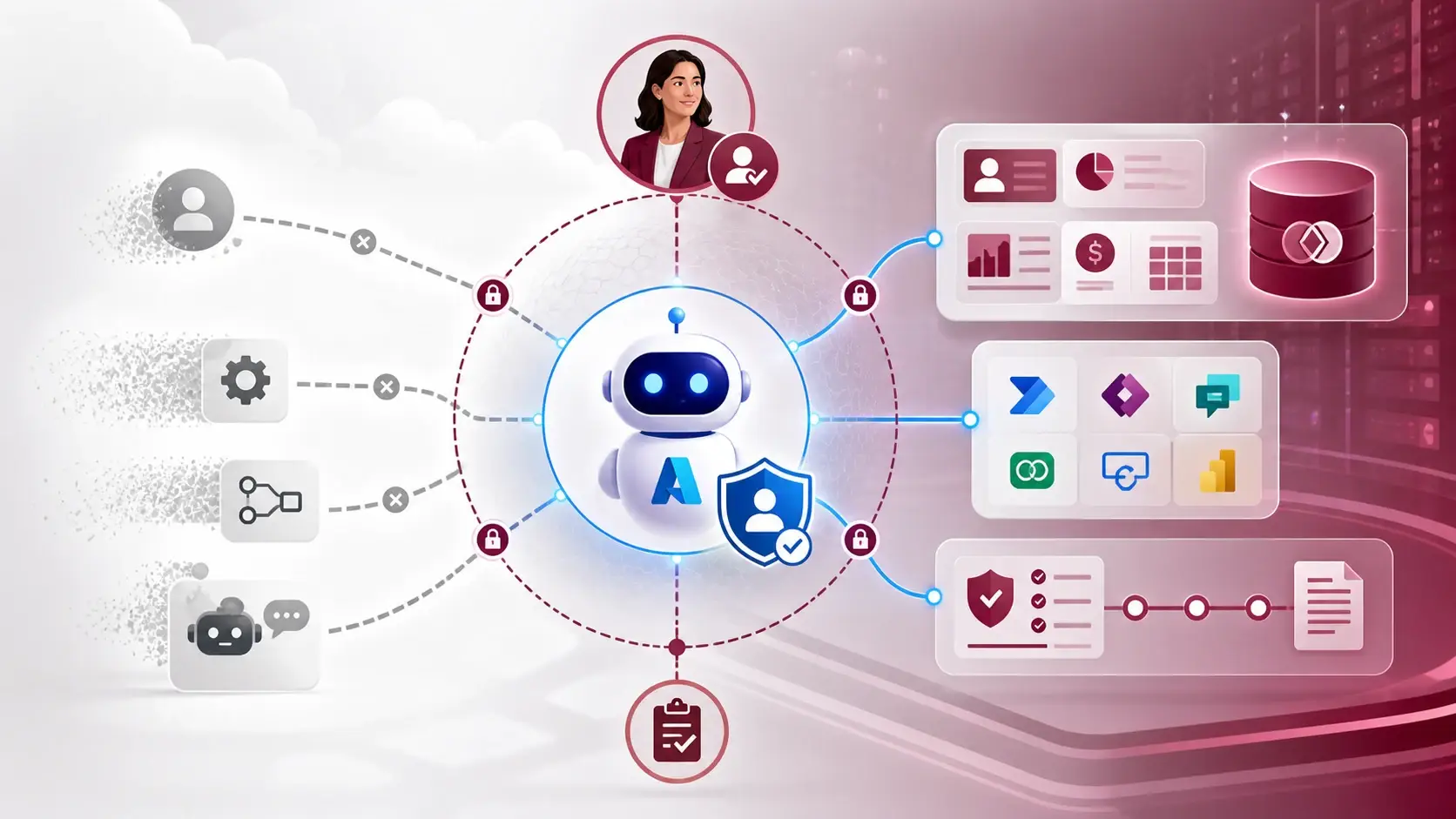
Dataverse is becoming the operating layer for agentic Power Platform work
A person knows that two fields mean the same thing, or that a status must only change after an approval. An agent only knows what you have written down somewhere it can see. That makes one old question urgent again: where do your business rules actually live?
What Microsoft is adding
Microsoft's Dataverse agent data platform material describes three audiences. Business users reach business data through Microsoft 365 Copilot. Makers can describe processes and rules as business skills, currently in public preview. Developers can use the Dataverse Skills plugin with coding agents such as GitHub Copilot and Claude Code to work across schemas, data, queries and solutions.
The Power Platform Developer Blog describes Dataverse Skills as an open-source plugin supporting the connect, build and manage phases of Dataverse work. The 2026 release plan adds storage management and closer links with Microsoft 365 Copilot and Work IQ.
Four places a rule can live
When I review a Dataverse model for agent use, I sort the important rules into four places:
- The structure — relationships, required columns, choice values and status reasons. These are rules the platform enforces for everyone.
- Business rules and server-side logic — validation that must hold no matter who, or what, makes the change.
- Business skills and descriptions — the steps and judgement that are not obvious from the schema: "check the credit limit before raising an order above this amount".
- Somebody's head — the rules nobody wrote down. These are the dangerous ones.
The goal is to move rules up this list. Anything that must never be broken belongs in the first two places, because a description can be ignored and a constraint cannot.
Smaller and clearer wins
Years of undocumented exceptions do not disappear when an agent arrives. They become visible, usually as wrong answers. A smaller model that is explicit and well owned will serve an agent better than a large one full of history.
The same delivery basics still apply, a point Fabian Hutzli makes well in his delivery platform work: repeatable environments, traceable changes and quality gates. Natural language reduces friction, but it does not replace a reliable way to ship changes.
Low-code design, data architecture and AI governance are no longer separate conversations. The teams that do well next will be the ones that make their business context clear, not just the ones that can build a demo fast.
A practical next step
Take one table that sits at the heart of a real process. With the people who use it, list its five most important rules and place each one in the four categories above. Then test with a normal request, an incomplete one and one the user should not be allowed to make.
Sources
References used for this article. Links open in a new tab.
- PuntoBello Blog — Building a Delivery Platform for the Microsoft Power Platform: Lessons from My Master's Thesis
- Microsoft Dev Blogs — Dataverse Skills: Your Coding Agent Now Speaks Dataverse
- Microsoft — Dataverse Is Your Agent Data Platform: Here’s What’s New
- Microsoft Learn — Overview of Microsoft Dataverse 2026 release wave 1